
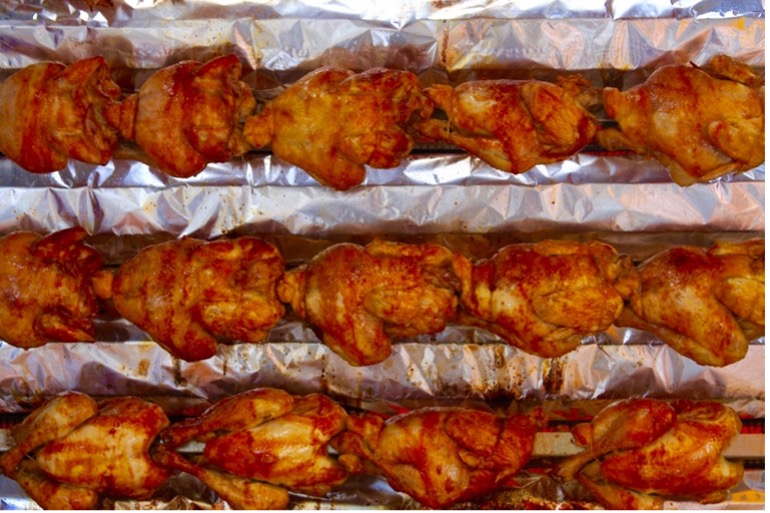
Food is as necessary as water for survival. Perhaps that is why it is so often used as a metaphor for life. Yet we say, “Man cannot live by bread alone.” Given its fundamental nature, food is often juxtaposed with lofty ideals. Presumably, we could starve for our ideals given the right circumstances.
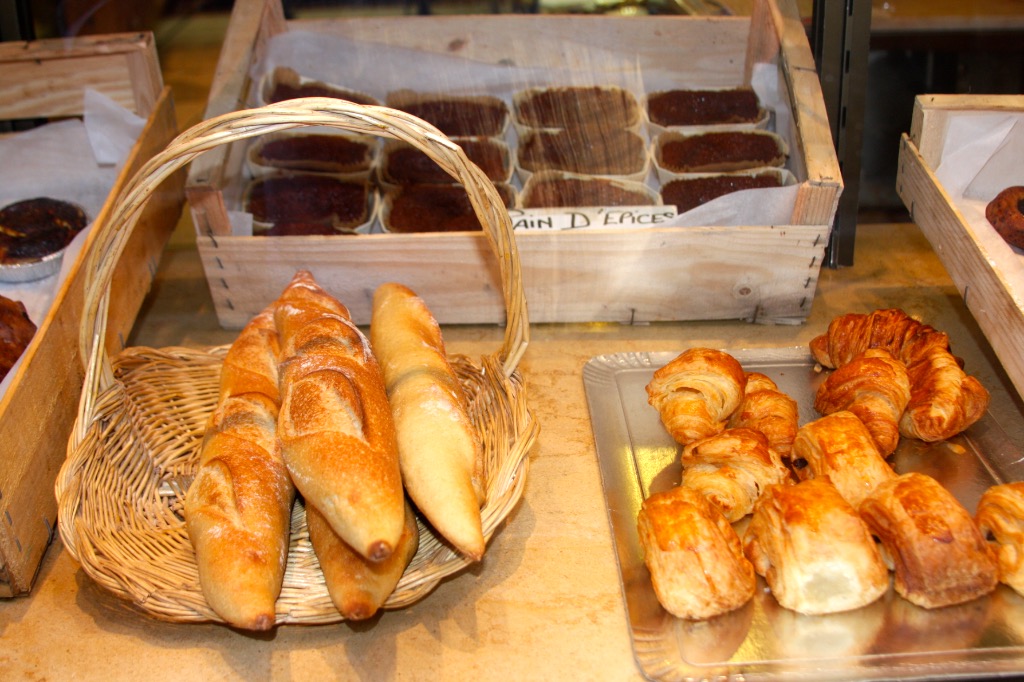
We all have associations and memories (as Proust famously observed upon biting that madeleine) attached to taste and smell. These associations tie us to a place, a moment in time; they even evoke a face long gone. (My grandmother, early mornings with cocoa, oatmeal with cream and brown sugar.)
In a time of abundance, we can take food for granted. There is so much of it and in such variety. We’re a culture that worries about obesity and overeating, with diabetes on the rise and other ills. An entire industry exists to undo the effects of overeating. There is a vast literature, both popular and scientific, devoted to these issues. Food can come to be seen as the enemy. Eating disorders are not the subject here. These issues have been addressed many times over. Were the disorders easily amenable to treatment, solutions would have been found long ago.
I am interested in how food comes up when it’s not the central issue for our patients, how it recurs in the normal course of everyday life. I think it can be used diagnostically to explore our patients’ early years, family dynamics, and much else. In fact, food is one of the royal roads to insight into our patients.

Frequently, food comes up fleetingly, almost in passing. We need to listen intently to grasp it. The first issues around feeding can start in infancy. Usually, we hear about these issues when new parents attempt to feed their infants. There’s been such a focus on nursing that when an individual finds she cannot nurse, for one reason or another, she can struggle with a variety of feelings. Even when there are no such issues, questions of ability and sufficiency are intense and painful, as are questions about how the new parents themselves were or weren’t nurtured. It’s a surprise to many parents to be thinking about it, for becoming a parent revives thoughts about one’s own early needs.

There is a role that food plays throughout childhood. Numerous patients describe an early childhood in which, by five or six years of age, they were preparing their own meals. Either their parents worked, were dead or gone, or, even worse, were oblivious. The children fended for themselves. They were symbolically “orphaned” children. Then there are those individuals for whom their mother’s food became toxic or distasteful, symbolic of deeper disturbances. These children also took to cooking for themselves, concocting something better in their own minds than the food proffered. For some people, the dinner table was the scene of nightly terror, where arguments erupted, or there were rituals of being forced to eat everything on their plate. There are those who went through the terrible trials of table manners training. For others, the television was always on during dinnertime, and no one really conversed in the household. Others, with alcoholism rampant in the home, took their dinners and ate alone in their rooms, each in a private world of their own. Frequently, in working with families, one finds a “daughter on the verge of anorexia” or a “suddenly vegetarian” son. These children have often gone unnoticed in their attempts to separate and differentiate from the family. Finally, there were those families that actually sat down together and, in a relaxed way, shared the day with each other in comfort. The many different ways our patients consumed their daily sustenance as children were highly symptomatic of the larger life they led.

Holiday and celebratory meals are emblematic for almost everyone. There is Thanksgiving if you are here in this country, and numerous Holy Days, depending on your culture. These are traditional ritual meals, with their special menus and tasty morsels. Often, these occasions become too laden with expectation, disappointment, loneliness, and despair, depending on the particular moment in a person’s life. All therapists recognize that starting around Halloween, our work becomes more intense. This can be a time of anniversaries and of losses. It can lend an air of poignant sadness to the occasion. If a patient has lost a beloved parent or spouse around this time of year, as many people have, then the holidays are tinged with sadness. These normal life events strike us with great force in our work.
Celebratory moments are always accompanied by cake: birthdays and weddings, for example. The pièce de résistance is always unimaginably sweet! I think cake represents the ultimate in luxury, self-nurturing, and, yes, comfort food!

This brings me to the vast subject of comfort food. There is no question that we all have our own version of comfort food. What one person finds comforting, another finds nauseating, so individual are these tastes. For many, carbohydrates and sweets are the go-to foods during a low moment (low in energy, mood, motivation, etc.). A patient of mine described her comfort food as “white food.” Whenever she was blue as a child, she’d reach for white food, such as custard-filled donuts, cream of rice, and milk. It’s important to understand how a patient has learned to self-soothe and self-nurture. Is it in ways that truly satisfy and calm them, or is it a desperate, repetitive, and futile attempt to staunch a deeper wound?
There are those who develop a passion for food. They know food deeply and go about the world seeking fantastic gustatory experiences. Some even cook beautifully prepared meals for themselves. Life is celebrated in small gustatory moments. Food becomes almost a religious experience. In fact, the patient I described earlier, who liked “white food” as a child, learned to nurture herself in adulthood by becoming a superb chef.
There is enormous ethnic diversity in food. It behooves us to be aware of culinary diversity and customs as we learn about each patient. That wonderful exoticism and variety are now available to us all as the globe shrinks and the number of restaurants expands.
What attitudes toward food do we bring as therapists? We all have our own views of food. We are all raised with a set of food preferences shaped by our cultural background and earliest food experiences. Our tastes seem to be laid down early. We gravitate toward the same basic foods, and our palates develop from those origins. I was struck one day, when my brother came to visit, by how he went for the same items at the market that I was accustomed to choosing. We hadn’t lived in the same house for thirty years!

What is our attitude as therapists toward mealtime and eating? What do we bring to our work? Do we take time to enjoy our own food? Do we savor moments over dinner with friends? Do we enjoy preparing our own meals? And what about breakfast? Do we start the day slowly with a steaming cup of coffee and a bite of bread? Do we sit with our children at the start of the day, readying them for the adventures ahead? I ask these questions because, in a frenzied society, they are worth asking.
And what is the role of food in the therapeutic moment? Patients sometimes bring water, coffee, or even food to the office. What is your policy? Some therapists are very clear that there should be no food or beverage around, whereas others supply drinks, water, even coffee or tea. Then, of course, there are the holidays when numerous patients may bring plates or jars of homemade food for you to enjoy… their kitchen, a most intimate part of their home, to your mouth. Such gestures of intimacy can blur boundaries, but in fact may represent a tremendous sign of growth…the ability to give back. If the giving is excessive, however, there are clearly important issues to explore and discuss.

Finally, I want to take a moment to celebrate food. With all of its freighted meanings, we can lose sight of the sheer delight and wonder of a beautiful meal shared with dear friends. Such is the nature of nurturance.
Antonia Meltzoff, Ph.D. (1939-2020) was a celebrated psychologist who was a longstanding member and Fellow of SDPA. She was a talented writer and keen observer of human nature. This article was first published in the San Diego Psychologist.