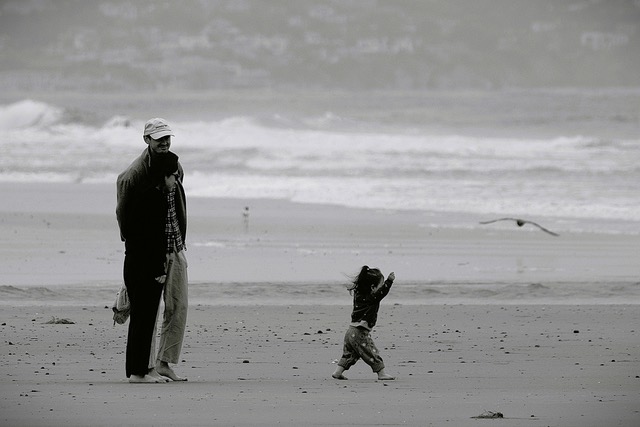

Gerald “Gary” Vernon, Ph.D. is a retired psychologist and former SDPA member who has had a lifelong relationship with photography. Most mornings, he can be found around the lagoons in Del Mar taking pictures of wildlife and fauna.
For older adults and those who love and work with them.

Gerald “Gary” Vernon, Ph.D. is a retired psychologist and former SDPA member who has had a lifelong relationship with photography. Most mornings, he can be found around the lagoons in Del Mar taking pictures of wildlife and fauna.


Jim Bazzetta is a geriatric clinical psychologist practicing in San Diego. He is semi-retired. Jim’s passions include photography and tennis. Born in the U.S., Jim was raised in Italy and Puerto Rico where his father’s career took the family. He speaks Spanish fluently. He particularly loves travel to Mexico to visit extended family and to collect Mexican pottery. Recently, Jim spent two weeks in Ecuador visiting a tennis buddy who maintains a home there.


Jon Nachison is a retired Past President of SDPA. The creator of Stand Down, Dr. Nachison is a talented musician and photographer.

When I lived in Massachusetts many years ago, it was common for people to retire in Cape Cod. The Cape was bustling in the summer with thousands of tourists visiting ice cream shops, seafood restaurants, and the beautiful beaches all along the Cape. In the winter, things slowed down. Shops closed, and the Cape became a quiet, rural area with a smaller population.
Capitis was a term used to describe what almost seemed like an illness among retirees on the Cape. As life slowed down, so did the people. They took their responsibilities less seriously and drifted from one event to another during the day. Planning went out the window, and residents on the Cape learned not to expect timely responses from workmen and others. It was as if a fever swept across the Cape from November through April.
Capitis can strike retirees anywhere. With unlimited time and responsibilities ahead, retired people might relax too much and not accomplish much. Is there anything wrong with that? No, not really, but often people feel unhappy because they believe they’re not making their time meaningful. We’ve all grown up in a society that encourages and rewards productivity and achievement. That won’t suddenly change just because someone is retired. Assuming most of us want to be productive in some way, here are some strategies to handle the unavoidable struggle with Capitis.
Continue reading “Battling Capitis”

Pete Libero is a retired psychologist living in Encinitas. He was active in San Diego Psychological Association for many years and taught at California School of Professional Psychology San Diego. He is now seriously studying guitar, taking lessons, and playing with a group. Pete is a passionate hiker, skier and photographer.


Gerald “Gary” Vernon, Ph.D. is a retired psychologist and former SDPA member who has had a lifelong relationship with photography. Most mornings, he can be found around the lagoons in Del Mar taking pictures of wildlife and fauna.

Retired Bishop Richard Pates and his brother, local psychologist Hugh Pates, watched the native dancers in their bright tribal garments. People were happy and enthusiastic, and they had every reason to be, as they were celebrating a new boarding school that housed faculty and two hundred students. Many of the coed students were unfamiliar with how to use the shower and toilet when they first arrived at the school, and others were worried that a protective wall surrounded the school to shield them from potentially dangerous groups of men.
So where were the Pates brothers, and what was their role in all of this? The answer to the first question was Malawi in East Africa. A country with 21 million people, Malawi is the second poorest in the world, with 70% of its population living below the poverty line. Outside the few urban areas, there is little or no electricity or farm machinery, though much of the population tends small farms. Irrigation is primitive, and the population is largely uneducated.
Continue reading “Senior Journeys: Changing the World”
Rich Hycner, Ph.D.
David DiCicco has asked me to write about my “creative process!” As I write this now, however, I’m also aware of the irony that if writing is creative, and if I’m trying to discern my own ‘Creativity’ at this point, I must acknowledge that others have significantly influenced my creativity. One simple example is Erving and Miriam Polster’s incredibly creative psychotherapy demonstrations, which had a profound impact on me. They were truly creative therapists; the best I’ve seen. And once in a great while, I am moderately creative in my therapy compared to them, though I am committed to becoming even more creative.
A better example of my creative process is writing and publishing an article on Gestalt therapy in 1985, proposing a “Dialogical Gestalt therapy” (as opposed to Fritz Perls’ more confrontational approach to Gestalt). Little did I know that this would lead me to write, or co-write, three books on a “Dialogical-relational approach to Gestalt Therapy.” This journey was partly inspired by a serendipitous situation in which a teacher I admired recommended that I read Martin Buber’s “I and Thou.” As they say, the rest is history: my writing has surprisingly (to me) led to presenting workshops in six different countries and the books being translated into six other languages! It’s only now, in writing this, that I see a hint of creativity in what I’ve done.
Rich Hycner, Ph.D. is a licensed clinical psychologist with over thirty years of experience who practices in Solana Beach. He specializes in marriage, couples and individual therapy and emphasizes a relational approach. He is a long-time member of San Diego Psychological Association and has authored or co-authored books on relationship.

1. Were you a creative person in your early years? If so, how?
I started drawing when I was 9 years old. I enjoyed creating pencil sketches of various subjects. One sketch that I believe I still have somewhere is of my baby sister in her stroller when she was a few months old. I also made sketches from pictures that caught my attention, like eagles and other interesting items. At some point, I began drawing pictures of houses and buildings, designing them, and creating potential floor plans. I thought for several years that I wanted to be an architect. Then, when I was 13 or 14, I read something about psychology that piqued my interest. I was fascinated and decided to pursue that path. So, I followed that direction and obtained my BS degree in Psychology. Along the way, I also began writing poetry regularly.
After obtaining my BS degree, I worked for General Motors for a year and realized that the corporate world was not for me. I took a year off to travel to Morocco and Spain, spending significant time in Marrakesh, Madrid, Barcelona, and Ibiza. During this period, I wrote more poetry and resumed sketching. Upon my return, inspired by a week spent at the Prado in Madrid, where I admired the works of Goya, Velazquez, Bosch, and others, along with my discovery of Gaudi’s remarkable creations in Barcelona, I reaffirmed my desire to become an artist and enrolled in preliminary courses for an MFA program. My future wife expressed her discontent, stating that she would not live with a starving artist in a beret. During that time, I became friends with several of my art professors, and we discussed the meaning of life and existential philosophy. Upon discovering that two psychology professors on campus practiced existential psychology, I rekindled my interest in psychology and enrolled in a Master’s degree program. However, my passion and involvement in art and poetry persisted throughout the years.
Continue reading “Creativity in Retirement:”