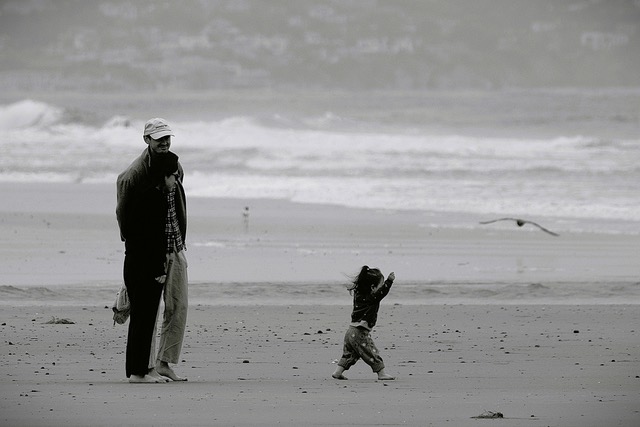

Gerald “Gary” Vernon, Ph.D. is a retired psychologist and former SDPA member who has had a lifelong relationship with photography. Most mornings, he can be found around the lagoons in Del Mar taking pictures of wildlife and fauna.
For older adults and those who love and work with them.

Gerald “Gary” Vernon, Ph.D. is a retired psychologist and former SDPA member who has had a lifelong relationship with photography. Most mornings, he can be found around the lagoons in Del Mar taking pictures of wildlife and fauna.


Jim Bazzetta is a geriatric clinical psychologist practicing in San Diego. He is semi-retired. Jim’s passions include photography and tennis. Born in the U.S., Jim was raised in Italy and Puerto Rico where his father’s career took the family. He speaks Spanish fluently. He particularly loves travel to Mexico to visit extended family and to collect Mexican pottery. Recently, Jim spent two weeks in Ecuador visiting a tennis buddy who maintains a home there.


Jon Nachison is a retired Past President of SDPA. The creator of Stand Down, Dr. Nachison is a talented musician and photographer.


Pete Libero is a retired psychologist living in Encinitas. He was active in San Diego Psychological Association for many years and taught at California School of Professional Psychology San Diego. He is now seriously studying guitar, taking lessons, and playing with a group. Pete is a passionate hiker, skier and photographer.


Gerald “Gary” Vernon, Ph.D. is a retired psychologist and former SDPA member who has had a lifelong relationship with photography. Most mornings, he can be found around the lagoons in Del Mar taking pictures of wildlife and fauna.

Rich Hycner, Ph.D.
David DiCicco has asked me to write about my “creative process!” As I write this now, however, I’m also aware of the irony that if writing is creative, and if I’m trying to discern my own ‘Creativity’ at this point, I must acknowledge that others have significantly influenced my creativity. One simple example is Erving and Miriam Polster’s incredibly creative psychotherapy demonstrations, which had a profound impact on me. They were truly creative therapists; the best I’ve seen. And once in a great while, I am moderately creative in my therapy compared to them, though I am committed to becoming even more creative.
A better example of my creative process is writing and publishing an article on Gestalt therapy in 1985, proposing a “Dialogical Gestalt therapy” (as opposed to Fritz Perls’ more confrontational approach to Gestalt). Little did I know that this would lead me to write, or co-write, three books on a “Dialogical-relational approach to Gestalt Therapy.” This journey was partly inspired by a serendipitous situation in which a teacher I admired recommended that I read Martin Buber’s “I and Thou.” As they say, the rest is history: my writing has surprisingly (to me) led to presenting workshops in six different countries and the books being translated into six other languages! It’s only now, in writing this, that I see a hint of creativity in what I’ve done.
Rich Hycner, Ph.D. is a licensed clinical psychologist with over thirty years of experience who practices in Solana Beach. He specializes in marriage, couples and individual therapy and emphasizes a relational approach. He is a long-time member of San Diego Psychological Association and has authored or co-authored books on relationship.

Preston Sims
I know you have always been creative. Can you describe how your creativity influenced you in your early years? Do you have any idea where it came from?
I had to look up the definition of “creative,” which I found online as “relating to or involving the imagination or original ideas, especially in the production of an artistic work.” Regarding imagination and not so much “original ideas,” that was with me from an early age. Partly because I had alcoholic parents who had a great (LP) music collection, I could put on a record by Elvis Presley or Louis Prima or the Beatles and not just listen to it- I would stand in the middle of the living room and become Louis Prima or Elvis or one of the Beatles. If I was one of these guys- everyone was interested in me- everyone wanted to be me, and by pretending to be them, I was transported to another (albeit make-believe) world.
Continue reading “Creativity in Retirement:”
I started playing guitar in the last few years, so improvement is the name of the game. I wanted to advance from being a beginner to playing music I enjoy listening to. I got invited to play with a group of about five other people, all more advanced musicians, and playing with them has helped me improve the most. I also took a semester-long guitar class at a local community college and a few shorter courses at UCSD Extension. I had the good fortune to have excellent instructors for both and have continued private lessons. This has been a lot of fun, which drives wanting to improve. When I hear something I like, I try to play it, even at a beginner level.
Learning a song or a technique on the guitar is itself creative. If I can play a tune better than I did a week ago, that’s gratifying. Figuring out how to play a tricky part of a song creates the ‘I can do it!’ feeling. Playing music is an immediate gratification experience, so if I play something that sounds good, I want to play more. The most fun thing has been playing music with other people; it’s a great environment to develop music skills. And there’s a lot of collaboration, cooperation, and organization when playing a song together. Interacting and learning from my music teachers has been very motivating because they are so engaged in their music. Listening to different musical genres at local venues has been inspiring and has resulted in fun nights out.
Continue reading “Creativity in Retirement:”
A Legacy of Creative Service.
Colonel Schmidt smiled broadly and pulled on his cigarette. He envisioned the Fuhrer promoting him to General and pinning a medal on his chest in the main square of Berlin. It would be the proudest day of his life.
But then something was wrong. Where were the battalions he expected to meet on the other side of the forest? All the messages they had intercepted indicated the presence of troops there. He had seen many tanks in the area with his own eyes! He had heard the advancing trucks. When a shell landed near the Colonel, his smile left for good, and he scurried for cover.
So, what is that vignette all about? The German officer had been duped by the Ghost Army, an undercover unit during WW II whose mission was to deceive the enemy and trick them into chasing the nonexistent American troops. The Ghost Army used dummy weapons like rubber tanks and trucks, allowed the Germans to intercept manufactured radio messages, and used powerful loudspeakers to convince the Germans that they were hearing troop movements.
Continue reading “Ghost Army”